Room Style model
How our model works
Shop this room reads a photo of your room and names its style. This page explains what the model learned from, how well it did in our test, and where it goes wrong. Roomwell is a Concept Project: the model is real and was measured as described here, but the store is a demo.
The result
- Right first time
- 75.4%
- 95% interval 71%–80%, on 398 photos
- Guessing the most common style
- 28.1%
- the baseline to beat
- When it is sure (50%+)
- 83.9%
- right, on the 83% of photos where it answers
Measured on 27 November 2026 with 5-fold cross-validation: every photo was tested by a model that had never seen it, and photos of the same room were never split between learning and testing. These are clear examples of each style, so photos of real, lived-in rooms will score lower.
What it learned from
- 398 real photos of rooms from the Open Images dataset, originally shared on Flickr under the CC BY 2.0 licence. Every photographer is credited in our licence register. No AI-generated images were used.
- Five styles: Boho (73), Industrial (63), Mid-century (70), Minimal & Japandi (112), Scandinavian (80). Japandi and Minimal are one style because we found too few clear Japandi photos to teach it on its own.
- Claude, Anthropic's AI assistant, labelled every photo by looking at it, working for Paratrix. A second full review removed photos whose style was not clear at a glance; later checks removed spaces that are not homes (cafés, shops, studios, a church, a library) and renderings.
How it works
- Your photo is scaled and cropped to a 224-pixel square in your browser. It is never uploaded or stored. Afterwards only the style it named (and whether it was unsure) is counted, with nothing about you, so the shop can see which styles are popular.
- An open vision model, DINOv2 (by Meta AI, Apache 2.0 licence), turns the photo into 384 numbers that describe what it shows. We use it as it is, compressed to 23 MB.
- Our own small classifier, trained on the photos above, turns those numbers into a chance for each of the five styles.
- If no style reaches 50%, we say we are not sure and show the two closest styles, rather than guessing.
- The room's main colours are found separately, by grouping similar pixels. Products are suggested by their style tags in our catalogue and how well their colours sit with yours.
Style by style
| Style | Photos | When it says this style, it is right | Of rooms in this style, it finds |
|---|---|---|---|
| Boho | 73 | 78% | 78% |
| Industrial | 63 | 71% | 67% |
| Mid-century | 70 | 64% | 66% |
| Minimal & Japandi | 112 | 85% | 81% |
| Scandinavian | 80 | 74% | 80% |
Where it gets confused
Rows are the real style; columns are what the model said.
| Boho | Industrial | Mid-century | Minimal & Japandi | Scandinavian | |
|---|---|---|---|---|---|
| Boho | 57 | 6 | 4 | 1 | 5 |
| Industrial | 6 | 42 | 9 | 2 | 4 |
| Mid-century | 8 | 6 | 46 | 7 | 3 |
| Minimal & Japandi | 0 | 2 | 8 | 91 | 11 |
| Scandinavian | 2 | 3 | 5 | 6 | 64 |
The biggest mix-up is Minimal & Japandi rooms read as Scandinavian: both are calm and light, with pale wood. Industrial, Mid-century and Boho also overlap, because all three use warm wood, leather and busy walls.
Examples
Chosen to illustrate, not at random. Each result comes from our test, made by a model that had not seen the photo.
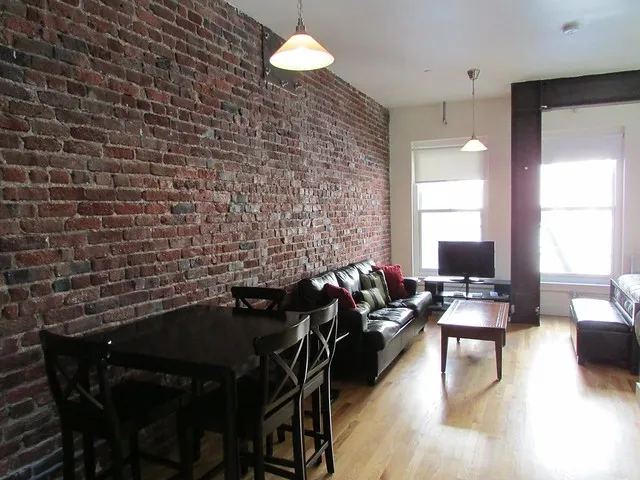
Industrial, 95% sure
Photo: Glen Bowman, CC BY 2.0, resized
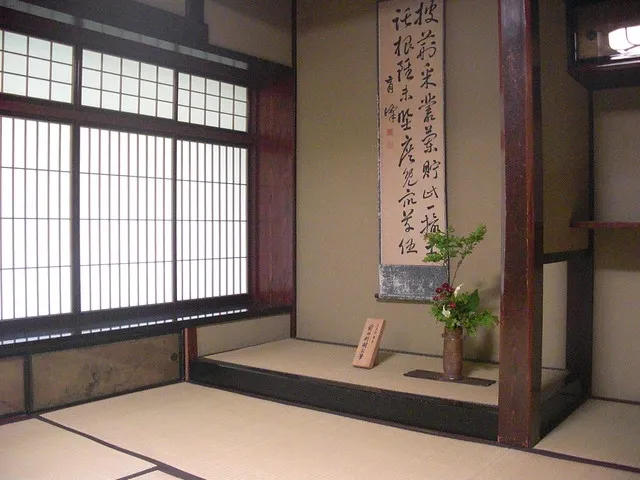
Minimal & Japandi, 100% sure
Photo: Sébastien Bertrand, CC BY 2.0, resized
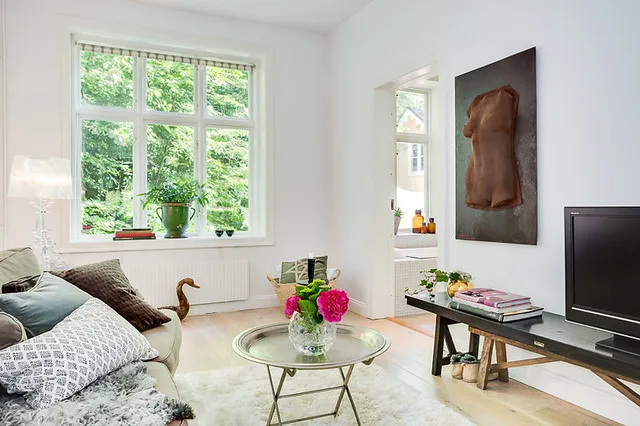
Scandinavian, 98% sure
Photo: Katarina Jardenberg, CC BY 2.0, resized
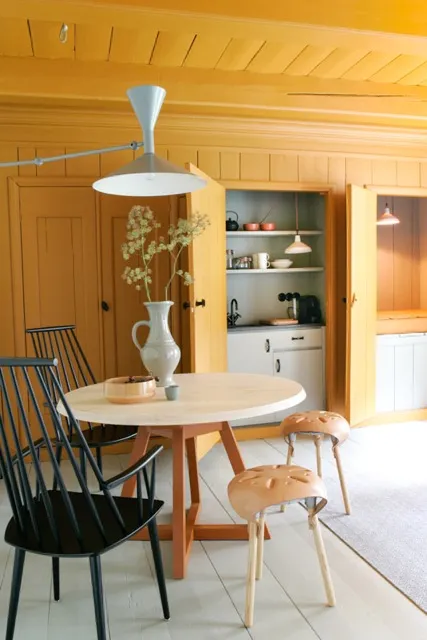
Mid-century, 70% sure
Photo: Bond van Nederlandse Architecten (photos: Thijs Wolzak and Anna de Leeuw), CC BY 2.0, resized
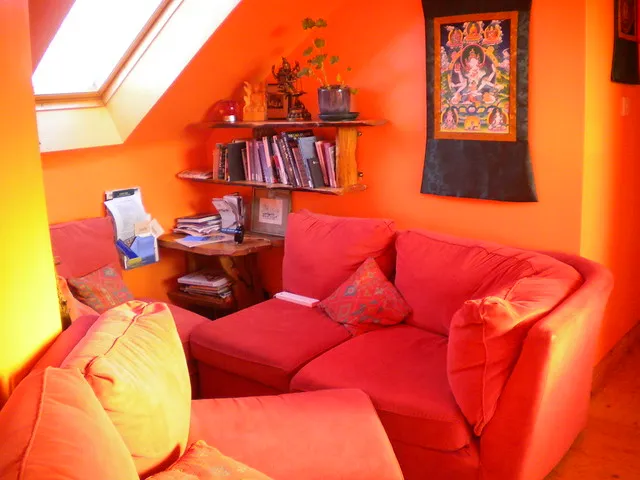
Boho, 95% sure
Photo: Gabriela Avram, CC BY 2.0, resized
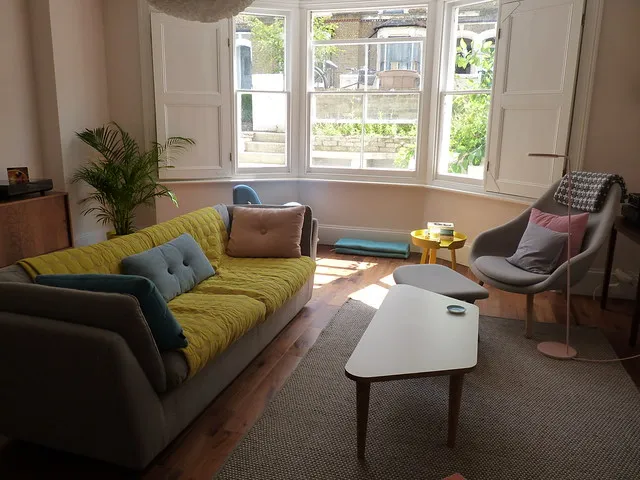
Not sure: Industrial at 33%. We had labelled it Scandinavian.
Photo: Iain and Sarah, CC BY 2.0, resized
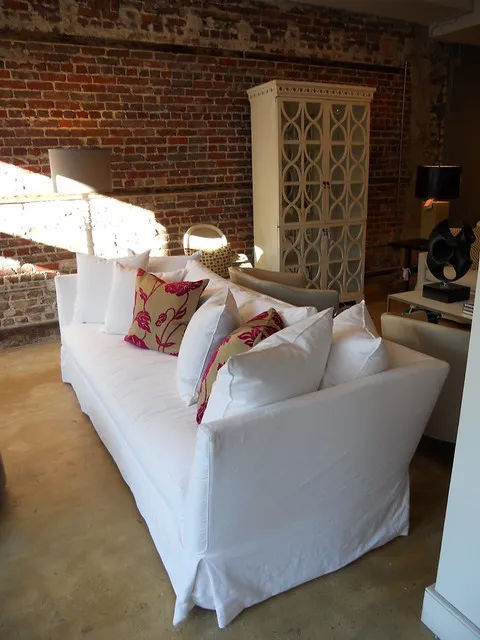
Not sure: Scandinavian at 34%. We had labelled it Industrial.
Photo: Charleston's TheDigitel, CC BY 2.0, resized
Known limits
- It was tested on clear examples. Dark, cluttered, half-finished or mixed-style rooms will often get a “not sure”, or a wrong answer.
- The photos are from Flickr in the 2000s and 2010s, so the newest trends are thin on the ground. A few are hotel or inn rooms and showroom sets.
- Minimal and Japandi are one answer. Many of its photos are traditional tatami rooms.
- One labeller (Claude) labelled the photos, with a second full check and no second human opinion. Some labels may still be arguable.
- It only knows these five styles. A room in another style will get the nearest one.
Training code, labels, licences and the full report are in the project's repository (folder ml/). Built by Paratrix Solutions as a Concept Project.